
Fuente: viapaís
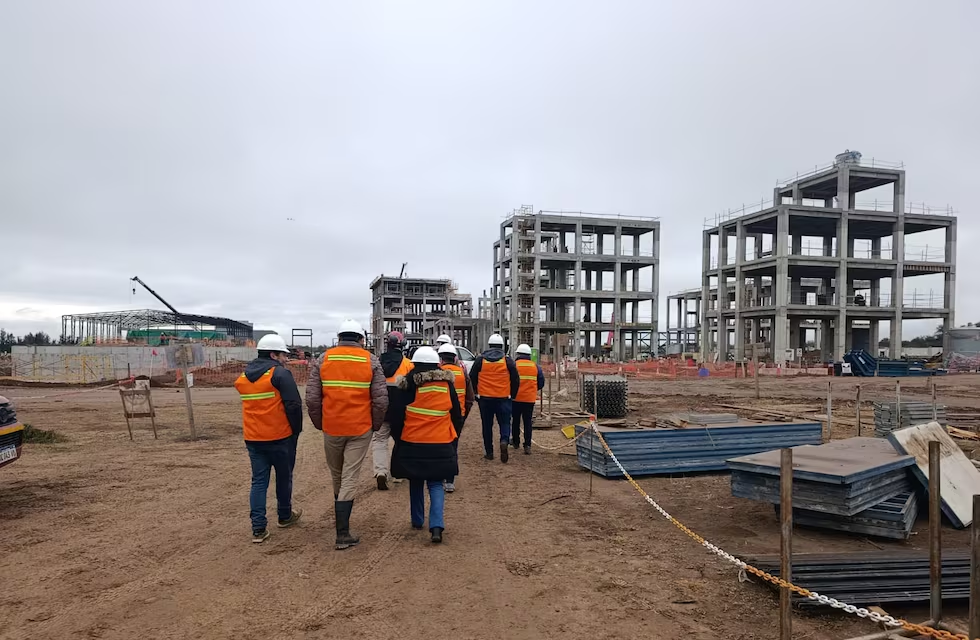
The province of Jujuy is going through an unprecedented industrial transformation. In the Perico Industrial Park, the Chinese giant Tsingshan Mining Development is rapidly advancing in the construction of a chemical plant that will mark a turning point in Argentina’s lithium development. With a total investment of US$120 million, this facility represents far more than a factory: it is the key component positioning Jujuy as the logistical and productive epicenter of South America’s “white gold.”
Founded in 1988 and ranked 279th in the Fortune Global 500, Tsingshan is the world’s largest nickel producer. Its arrival in Argentina strengthens a vertically integrated strategy within the lithium value chain—from extraction in the salt flats of Salta to the production of essential chemical inputs needed to transform mineral into lithium carbonate, the critical component powering the global electromobility revolution.
A Chemical Hub for the Entire Region
The Perico plant will occupy 14 hectares in the Industrial Park, with room for future expansion. In its first phase, it will produce 100,000 tons per year of hydrogen chloride (hydrochloric acid) and 35,000 tons per year of sodium hydroxide (caustic soda)—fundamental inputs used to remove impurities and process lithium compounds extracted from the Puna salt flats.
These chemicals will not only supply Tsingshan’s own operations at the Centenario Ratones project in Salta—where the company holds a 49.9% stake and expects to produce around 50,000 tons of lithium carbonate annually— But will also supply companies in Chile, Bolivia, and Argentina, consolidating a lithium industrial cluster in northern Argentina.
The investment will be executed in two stages: US$80 million in the initial phase and US$40 million in the expansion. Construction requires 18 months of civil works and currently employs around 800 workers, generating more than 1,000 jobs during the building phase. Once operational, the plant will require 200 to 300 permanent skilled employees, including chemical, electronic, industrial, and computer engineers.
World-Class Technology and Infrastructure
The project includes strategic guarantees for energy supply: 10 megawatts of electric power secured by the provincial distributor EJE S.A., along with additional connection works between the San Juancito plant and the Industrial Park. A gas supply with capacity exceeding Tsingshan’s demand has also been secured, anticipating the growth of other companies that will establish operations in the area.
Its integration with the Perico Free Trade Zone and the Gobernador Horacio Guzmán International Airport provides unique competitive advantages. The Free Trade Zone enables commercial operations with tax and customs benefits that facilitate the import of technology and the export of finished products. The airport, located just a few kilometers away, enables fast logistics for specialized inputs and technical personnel.
In addition, the Industrial Park has a bimodal cargo transfer station that connects rail and road transport—a strategic asset for the movement of goods toward Chile, Brazil, and Paraguay. State-of-the-art digital infrastructure is planned, including fiber-optic connectivity up to the Paso de Jama, GPS traceability systems, and remote-control capabilities.
Strategic Position in Mercosur and the Bioceanic Corridor
Perico’s location is no coincidence. The city sits at the heart of the Capricorn Bioceanic Corridor, a 2,400-kilometer megaproject linking the Atlantic and Pacific Oceans across Brazil, Paraguay, Argentina, and Chile. This corridor will reduce transportation times by up to 10 days between inland Brazil and Asia-Pacific markets, bypassing the Panama Canal.
Jujuy covers 470 kilometers of the corridor’s nearly 3,000-kilometer extension, becoming a key logistics node. The province hosts the Paso de Jama, one of the main border complexes with Chile, located at 4,200 meters above sea level.
From there, goods reach the ports of Antofagasta, Mejillones, and Iquique in northern Chile—gateways to China, South Korea, Japan, and the broader Asia-Pacific region.
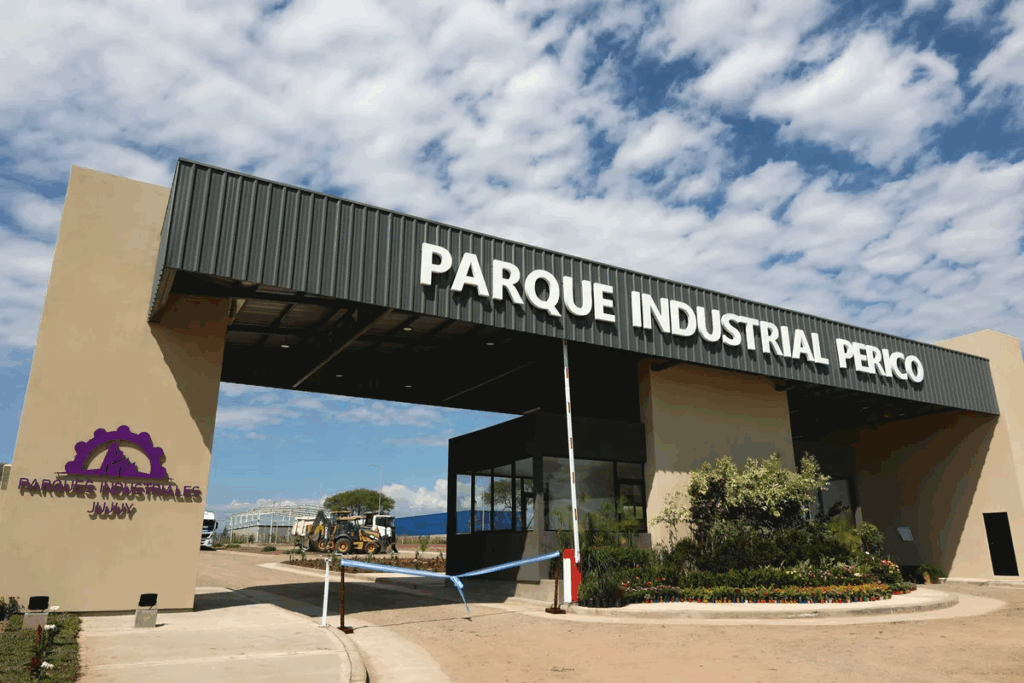
Parque Industrial Perico. Fuente: Gobierno de Jujuy.
The distance between Perico and Campo Grande, capital of Mato Grosso do Sul (population: 16 million), is just 1,400 kilometers—similar to the distance between Buenos Aires and Jujuy. This proximity opens unprecedented commercial opportunities for Jujuy’s products such as stone fruits, beans, flours, and legumes in high-demand Brazilian markets.
The Bioceanic Corridor not only improves Mercosur’s logistical efficiency but also strengthens the bloc’s physical integration, diversifies trade routes, and reduces dependence on traditional ports. For Jujuy, it means becoming a distribution hub for products to both oceans, consolidating its geopolitical role in the region.
A Forward-Looking Project
Santiago Bustelo, Tsingshan’s senior manager for South America, stated that the plant “has the capacity to expand and grow lithium projects in the region.” John Li, president of Tsingshan Mining Development, said during the signing of the memorandum of understanding:
“The goal is to develop the lithium value chain in the region and generate more job opportunities, more value, and more benefits for the citizens of Argentina. We are new in Argentina, but we are here to stay and to continue developing the region.”
The company is also promoting professional training programs, sending advanced Chemical Engineering students from the National University of Jujuy to China for training at Tsingshan facilities. Additionally, 20% of the plant’s workforce will be women, a policy of inclusion that breaks paradigms in the chemical and mining industries.
Tsingshan’s project is the strongest evidence yet that Jujuy has ceased to be merely a transit territory and has become an active protagonist in the lithium revolution.
With world-class infrastructure, a strategic position in the Bioceanic Corridor, and an expanding industrial ecosystem, the province is solidifying its status as the logistical and productive heart of tomorrow’s Mercosur. The construction underway in Perico is more than just a chemical plant—it is the symbol of a new era for northern Argentina.